Beard Trends 2026: What Men Are Actually Growing
Updated July 2026
Two eras ended at roughly the same time.
The first was the caveman beard — grow it, leave it, hope for the best. That look peaked around the lockdown years and it has genuinely gone. The second, and this is the more recent death, was the stencilled beard — hyper-defined cheek curves, geometry so precise it looked drawn on, edges you could set a ruler against.
What replaced both is harder to name and much easier to wear: a beard with a deliberate shape that follows your actual growth instead of fighting it. Less length, more line. Soft edges rather than hard ones. And — the defining technical trend of the year — a beard that connects into your haircut rather than sitting on top of it.
Here’s where things actually are at the midpoint of 2026.
The Defining Trend: The Beard Is Part of the Haircut Now
If there is one thing separating a current beard from a 2019 beard, it is the transition at the sideburn.
The look everybody is asking for is a beard fade — the haircut’s fade blending down through the sideburn and into the beard, so the two read as one continuous shape with no visible seam. No hard edge above the ear. No gap between where the hair stops and the beard starts. The eye travels from the top of the head to the jaw without hitting a line.
This is the current flex in barbershops, and it’s genuinely difficult work. It’s also why the biggest practical change of 2026 is a booking change rather than a style change: the haircut and the beard need to be done as one job by one person.
A beard shaped without reference to the haircut, or a haircut faded without reference to the beard, produces exactly the seam the whole look is trying to avoid. Two separate appointments, however good each one is, cannot produce a connection.
It also interacts with fade height in a way most guys don’t anticipate. A low fade leaves the sideburn enough length to carry the haircut down into the beard naturally. A high fade with a full beard produces a hard disconnect — which can look excellent when it’s chosen deliberately, and looks like a mistake when it isn’t. Our guide to low, mid and high fades covers that decision in full.
The Five Throughlines of 2026
1. Intentional Shape, Not Maximum Length
The question has moved from how long can I get it to what shape suits my face. Shorter, well-shaped beards are outperforming longer unshaped ones across the board, and the men getting compliments are not the ones with the most facial hair.
2. Work With Your Growth, Not Against It
The most useful shift of the year. Rather than picking a named style off a chart and forcing your face into it, the approach now is to build around what you actually grow — your density, your curl pattern, your thin spots.
If your beard doesn’t come in evenly, this is genuinely good news. Uneven growth stops being a defect to correct and becomes a shape to design around: play to the areas that come in thick, keep the weak areas short enough that the contrast disappears, and the result looks intentional rather than compromised.
3. Soft Edges Beat Stencilled Geometry
The over-sculpted beard is done. Those hyper-defined cheek curves and perfect geometric lines now read as stencil art rather than facial hair, and the same softening that happened to fades this year happened to beard edges.
That does not mean no lines. The neckline and cheek line still have to be deliberate — see below, because they matter more than anything else on this page. It means the lines are placed where the growth naturally suggests, and softened rather than carved.
4. Natural Tone, Grey Included
Jet-black dye jobs are out, and emphatically so — a full-ink beard reads as artificial in a way it didn’t a few years ago. Natural tones win, and a touch of grey is now an asset rather than a problem to solve.
One technical note worth knowing: precision styles expose grey more. The tighter and more defined the beard, the more visible the grey becomes, because there’s less length for it to disappear into. If you’d rather it were less obvious, a slightly longer, softer shape hides it better than any product.
5. Moustaches Are Back On Their Own Terms
Standalone moustaches have returned, and specifically the slimmer end — micro and skinny styles rather than the heavy handlebar. The beardstache (a full moustache with stubble rather than a full beard) is also in circulation. Both are genuine style choices again rather than novelty.
Worth noting how directly this parallels what’s happening with hair — the same move toward matte finishes, natural texture and softer definition runs through both. If you want that side of the picture, we covered it in our men’s hair trends update.
The Styles, Sorted by How Much Work They Need
Same principle as our haircut guide: nobody chooses a beard by name, they choose by how much upkeep they’ll tolerate.
Every Few Days: Stubble
Light and heavy stubble. The workhorse of 2026 and, in survey after survey, the facial hair most people find most attractive. It sits between clean-shaven and full beard, reads rugged and sharp simultaneously, and works on almost every face.
It is also the single best option for patchy growth, because at that length the difference between a thick area and a thin one essentially vanishes.
The catch: stubble needs attention every two to four days. It is the lowest-commitment beard in terms of shaping and the highest in terms of frequency. If you shave every morning anyway, it costs you nothing.
Weekly: The Practical Middle
The short boxed beard. Short, full, squared-off, with a defined neckline and cheek line. Probably the most versatile beard that exists — office-appropriate, doesn’t require product, and holds its shape for about a week.
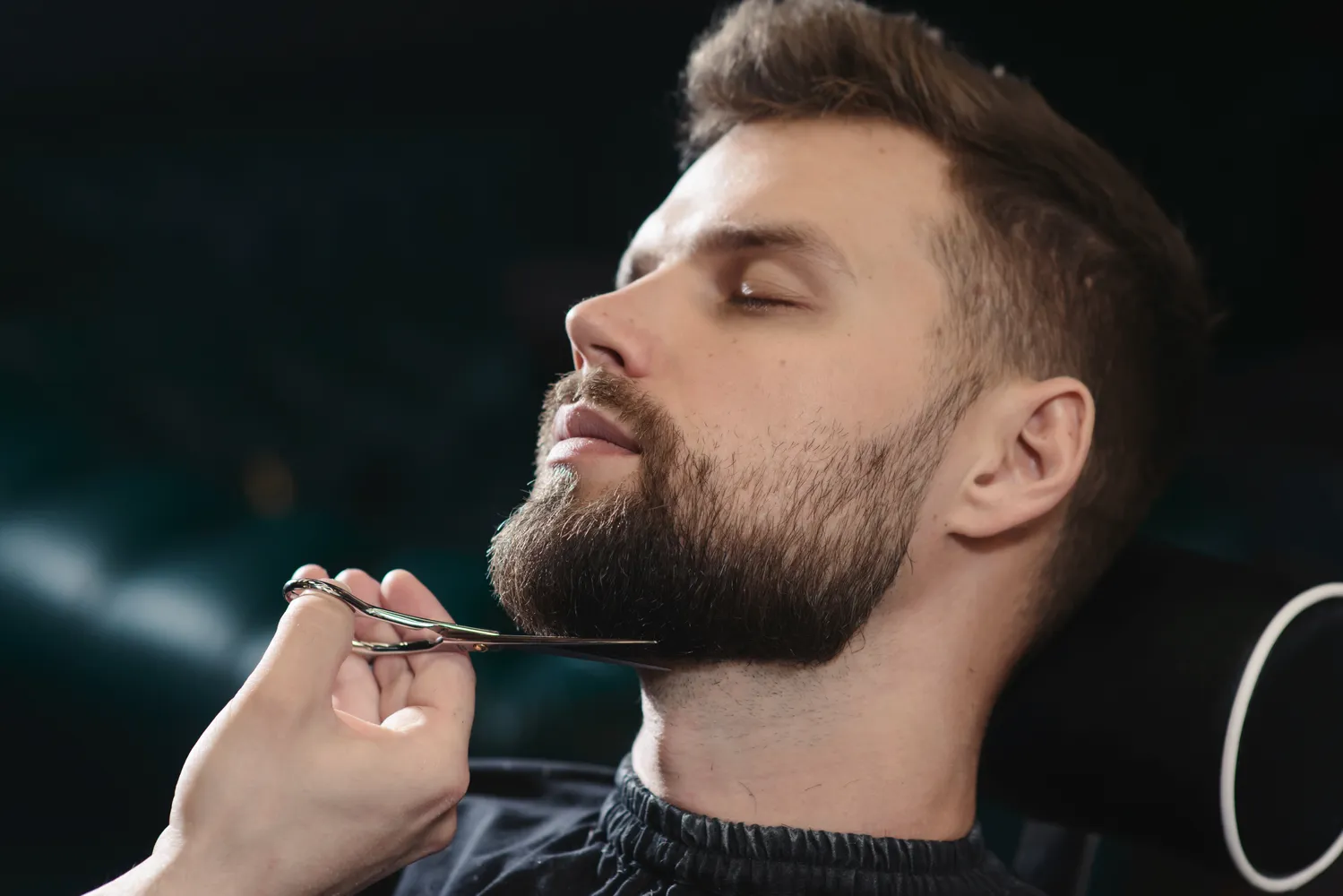
The beard fade / tapered beard. Not a separate style so much as a treatment: short at the sideburn, fading longer toward the chin, blended into the haircut. The most modern-looking option and the one that pairs best with a contemporary cut.
The goatee, the Van Dyke and the Balbo. All chin-focused, all back in normal circulation. Worth knowing that these are the strongest options for anyone whose growth is thin on the cheeks, because they concentrate the beard where most men grow thickest.
Weekly maintenance for this tier means the neckline and cheek line specifically — the length can go longer between visits, the edges cannot.
Every Two to Three Weeks: The Long End
The classic full beard. Still absolutely current, but the 2026 version is textured and shaped rather than left to its own devices — leaning into the natural curl and density instead of forcing everything into one flat line.
The Garibaldi and the Bandholz. The genuinely long options. Both need real commitment, real product, and a barber every few weeks for shaping and removing split ends.
Being straight about this tier: length is the least fashionable variable in 2026. A long beard is a personal preference rather than a trend, and it lives or dies on shaping.
Moustache Only
Chevron, and the slimmer micro styles. Standalone moustaches, back properly. The chevron is the fuller classic; the slim versions are the current direction.
The beardstache. Full moustache, stubble everywhere else. The most wearable version of a moustache trend for anyone not ready to commit to the whole thing.
The Two Lines That Actually Decide Whether a Beard Looks Good
Everything above is style. This is technique, and it matters more than any of it. A mediocre beard style with correct lines looks better than a fashionable one with bad lines, every single time.
The Neckline
This is where most self-trimmed beards go wrong, and it goes wrong in the same direction every time: too high.
Shaving the neckline up to the jaw is the most common beard mistake there is. It makes the beard look like it’s sitting on your chin rather than framing your face, and on anyone without a very sharp jaw it reads as a double chin with hair above it.
The working rule: place two fingers above your Adam’s apple. That height is roughly where the neckline belongs. From that point, curve upward in a U toward a point just behind each earlobe — not a straight line across, a curve that follows the natural shape of the jaw from underneath.
If in doubt, go lower than you think. A neckline that’s slightly too low grows out invisibly. One that’s too high takes weeks to fix and there is nothing you can do in the meantime.
The Cheek Line
The upper boundary, running from the sideburn down toward the corner of the mouth.
Two approaches, and 2026 has a clear preference:
- Natural — you clean up stray hairs above the natural line and otherwise leave it. Softer, lower maintenance, and the current direction.
- Defined — a deliberate line is created, usually higher and straighter than the natural growth. Sharper, and it needs redoing every few days to stay sharp. This is where over-sculpting happens.
The middle path, which is what most guys actually want: follow your natural cheek line, clean above it, and soften the edge rather than carving it.
Why This Is Worth Paying Somebody For
Both lines are on parts of your face you cannot see properly in a mirror, on a curved surface, and any mistake is symmetrical only by luck. This is also where a hot lather straight razor finish earns its keep — a razored neckline and cheek line look cleaner and stay clean noticeably longer than trimmer work, because the hair is cut at the skin rather than just above it.
Getting the lines set professionally once and then maintaining them at home is a completely different proposition from establishing them yourself with a trimmer and a hand mirror. Our beard trim and line-up is exactly that job, and it’s available with a hot lather razor finish.
If Your Beard Grows Patchy
The most common beard question there is, and 2026’s answer is better than previous years’ answers.
- Keep it shorter. Heavy stubble or a short boxed beard minimises the visible contrast between thick and thin areas. Length is what exposes patchiness — at a quarter of an inch, most gaps simply don’t read.
- Go chin-focused. The Van Dyke, the Balbo and the goatee all concentrate growth in the chin and moustache area, where nearly everyone grows thickest, and remove the cheeks from the equation entirely.
- Let the shape hide it. This is the hybrid approach: design around your strengths, keep the weak areas short, and accept an asymmetric shape if that’s what your face grows. Done deliberately it looks like a choice.
- Give it longer than you think before judging. Growth fills in unevenly and on its own schedule. Four weeks is not a verdict.
- And don’t dye it to fake density. That’s how you get the jet-black problem discussed above.
How Often to Trim
| Beard | Trim frequency | What you’re maintaining |
|---|---|---|
| Stubble | Every 2–4 days | Overall length and both lines |
| Short boxed / beard fade | About weekly | Neckline and cheek line; length monthly |
| Medium / corporate beard | Weekly for the lines | Length every 2–3 weeks |
| Full beard | Every 2–3 weeks | Shaping, split ends, lines |
| Long (Garibaldi, Bandholz) | Every 2–3 weeks | Shaping and thinning; lines weekly |
| Moustache only | Weekly | Lip line and shape |
The pattern across every row: the lines need attention far more often than the length does. Most guys have it backwards and trim the length while the neckline creeps.
Products, Briefly
Four things cover almost everyone.
- Beard oil — daily, on damp skin under the beard rather than only on the hair. Its main job is the skin, not the beard, and it’s the fix for flaking.
- Beard balm — for medium to long beards that need hold and shaping. Unnecessary on stubble.
- A dedicated beard wash — regular shampoo is too harsh for facial hair and strips it. This matters more than people expect.
- Matte styling clay for the moustache — shapes it without the shine. Same matte-over-gloss shift that’s happened everywhere else in men’s grooming this year.
What’s on the Way Out
- The over-sculpted beard. Stencil-precise cheek curves and geometric edges.
- Jet-black dye. Reads artificial. Natural tone, grey and all, is winning.
- The unshaped full beard. Length with no line is now just untidy rather than rugged.
- Necklines shaved to the jaw. Was never right; now also visibly dated.
- Heavy handlebar moustaches as a default. Slimmer is the direction.
- Beards shaped in isolation from the haircut. The visible seam at the sideburn is the clearest single marker of an out-of-date look.
Chicago Note: The Beard Season Is Coming
Two practical points for the second half of the year here.
Winter is the reason to grow one, and the reason it gets itchy. Chicago winter air plus indoor heating is aggressive on facial skin, and almost everything men call “beard dandruff” is dry skin underneath rather than a beard problem. Oil on the skin, not just the hair, applied to a damp face after washing — that solves the majority of it. If you’ve abandoned a beard in January before because of the itch, that was probably why.
Hats and beards interact. A beanie compresses the top of your sideburns and flattens the connection between haircut and beard, which is another argument for a lower fade through the winter months. The beard itself is unaffected; the transition is what suffers.
And the growing timeline. If you want a real beard for the winter, starting in late summer means you go through the awkward three-week stage while it’s still warm rather than in the middle of holiday party season. Worth thinking about now.
How To Ask For It
The 2026 default, ordered properly:
“Can you tape the beard down to about this length” — show with fingers or give a guard number — “tapered shorter at the sideburns and longer toward the chin, and blend it into the fade so there’s no line. Follow my natural cheek line and just clean above it, don’t square it off. Set the neckline about two fingers above my Adam’s apple in a U shape. Straight razor finish on the edges if you do that.”
That covers length, taper, connection, cheek line, neckline and finish in about twenty seconds. If you want to get better at this generally, our guide to talking to your barber applies to beards as much as haircuts.
What We’re Seeing in the Chair
[Shop observations go here — see editor’s note in the HTML comment above.]
Come In
Artur’s Barber Shop on Bryn Mawr in Edgewater does beard trims and line-ups, hot lather straight razor shaves, and haircut-and-beard as a single job — which, given where the trend has gone, is how it should be done.
If your beard has never been properly shaped, or you’ve been maintaining a neckline that’s crept up over the years, that’s a twenty-minute fix and a noticeable difference. Have a look at our work, meet the team, then book online or walk in.
Artur’s Barber Shop — 1135 W Bryn Mawr Ave, Chicago, IL 60660 · (872) 208-5558
Mon 10–7 · Tue–Fri 9–7 · Sat 7–6 · Sun closed
Frequently Asked Questions
What are the biggest beard trends in 2026?
Intentional shape over maximum length, beards that fade and connect into the haircut with no visible seam at the sideburn, softer edges instead of stencilled geometry, natural tone including grey, and shapes designed around your actual growth pattern rather than picked from a chart. Stubble and short boxed beards remain the most popular styles.
What is a beard fade?
A treatment rather than a style: the beard is kept shorter at the sideburns and gets gradually longer toward the chin, and the haircut’s fade blends down into it so there’s no line where one stops and the other starts. It’s the most modern-looking beard treatment of 2026 and it has to be done as one job with the haircut to work.
Where should a beard neckline be?
Roughly two fingers above your Adam’s apple, curving upward in a U toward a point just behind each earlobe. The most common mistake is going far too high — shaving up to the jaw makes the beard look like it’s sitting on the chin rather than framing the face. If you’re unsure, go lower; a low neckline grows out invisibly and a high one takes weeks to fix.
How often should I trim my beard?
Stubble every two to four days. Short and medium beards need the neckline and cheek line done about weekly, with length every two to three weeks. Full and long beards want shaping every two to three weeks. The consistent point is that the lines need attention much more often than the length.
What’s the best beard style for patchy growth?
Keep it short — heavy stubble or a short boxed beard, where the contrast between thick and thin areas essentially disappears. Alternatively go chin-focused with a Van Dyke, Balbo or goatee, which concentrate the beard where nearly everyone grows thickest and take the cheeks out of the equation. Don’t dye it to fake density.
Should I dye my beard if it’s going grey?
The trend has moved decisively against it, and jet-black dye in particular now reads as artificial. Natural tone with grey is an asset in 2026. If you’d rather grey were less prominent, a slightly longer and softer shape conceals it better than colour does, because tightly defined beards expose grey more.
Why is my beard itchy and flaky?
Almost always dry skin underneath rather than a beard problem, and it’s worse in a Chicago winter because of cold air and indoor heating. Beard oil applied to damp skin under the beard after washing — not just to the hair — fixes most of it. Using a dedicated beard wash instead of regular shampoo helps too, since shampoo strips facial hair.
Should I get my haircut and beard done at the same time?
Yes, if you want them to connect. The defining beard look of 2026 is a seamless transition from the fade into the beard, and that cannot be produced across two separate appointments — the person cutting the hair has to be shaping the beard with the same shape in mind.